What is risography and how does riso printing work
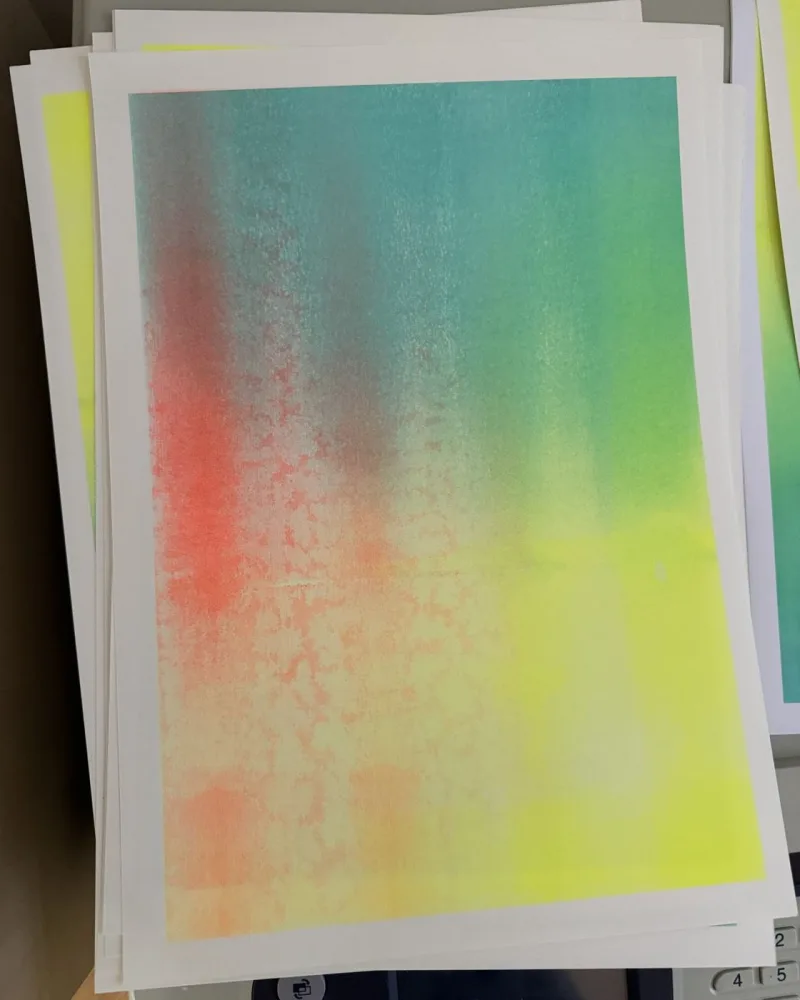
Risography is a printing technique somewhere between a photocopier and screen printing. I print all my riso posters with it, and since people often ask me about it, here is how riso printing works and why it looks the way it does.
Where the risograph came from
The risograph was developed by the Japanese company Riso Kagaku in the 1980s as a cheap, fast machine for large print runs in schools, offices and clubs. It looks like an office copier, but inside it works like a small automatic screen-printing press.
Artists and illustrators discovered it later: instead of newsletters they began printing zines, posters and books on it, because it gives rich colours for a fraction of the cost of offset. Today there are riso studios all over the world, and one of them is my studio in Prague.
How riso printing works
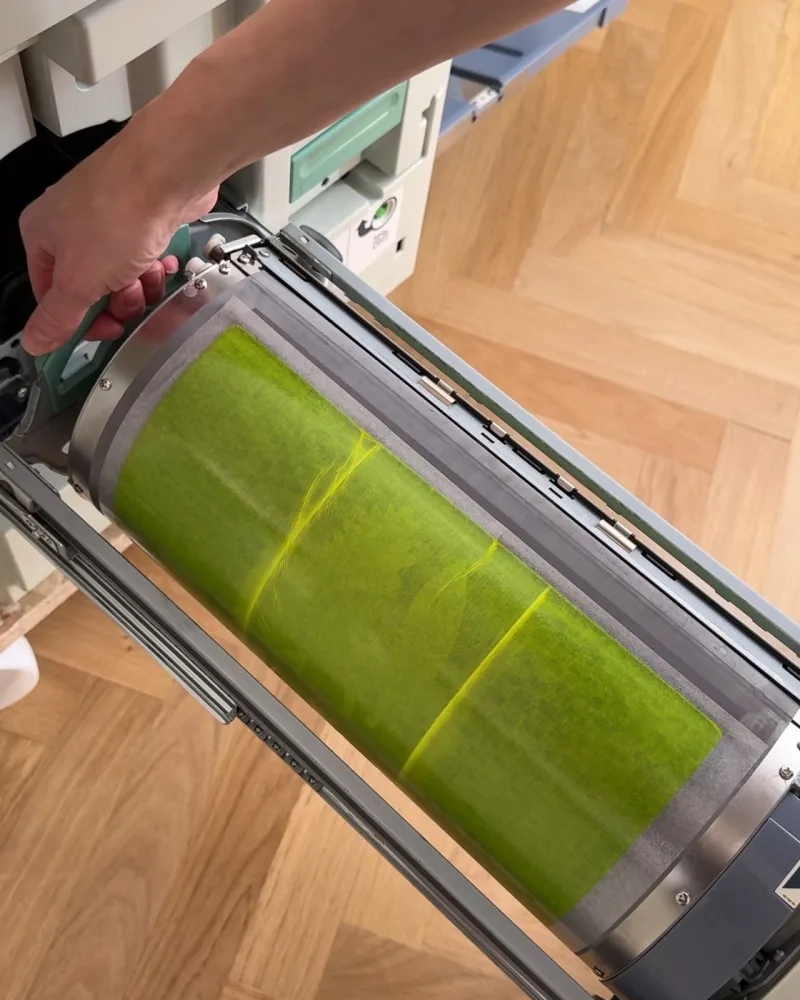
First the machine makes a master: a thermal head burns thousands of tiny holes into a thin film, following the artwork. The film is wrapped around a drum full of ink.
The drum turns, the ink passes only through the holes in the master and lands on the paper. Each drum holds a single colour, so in one pass the machine always prints just one layer.
A multi-colour poster is therefore made step by step: I separate the drawing into colours, print the first, let the sheets dry, change the drum, make a new master and run the whole edition through the machine again. A three-colour poster goes through the risograph three times.
The paper shifts very slightly with every pass. The colours never line up perfectly, and small offsets remain between the layers. This is called registration, and in risography it is part of the charm: no two prints are the same.
Why riso inks glow
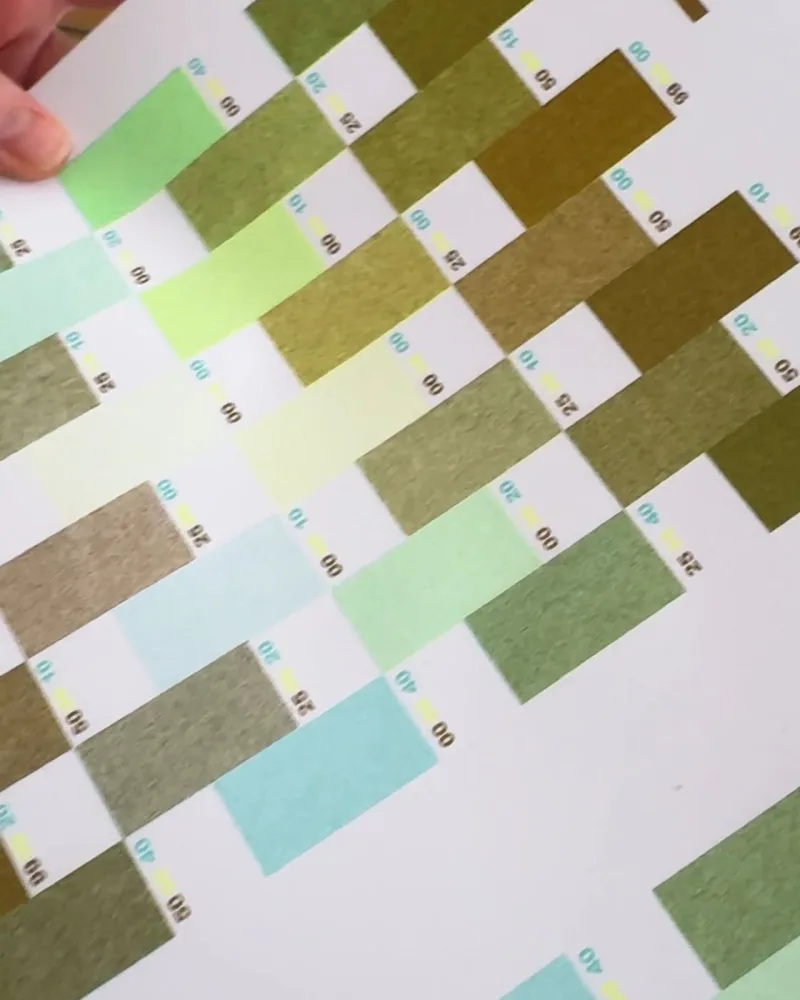
Riso inks are not toner but real ink based on vegetable oils. It soaks into uncoated paper, which gives the print a matt, velvety surface and a fine grain.
The inks are translucent: where two meet, a third colour appears. Riso inks also include fluorescent shades an ordinary printer cannot do. My fluorescent yellow and orange really glow on the paper.
Riso, screen printing or digital?
Risography shares its principle with screen printing, ink passing through a stencil, only the machine makes the stencil and does the printing. It is faster and suits smaller formats up to A3; screen printing can do large formats and thicker layers of ink.
Unlike digital printing, it does not mix colours from CMYK but prints ready-made spot colours layer by layer. It won't reproduce a photograph faithfully, but it gives rich flat areas, halftones, grain and colours you won't find anywhere else.
What gets printed on a risograph
Posters, zines, postcards, book covers, invitations and packaging. Risography pays off especially for smaller runs, from tens to hundreds of copies, where offset would be expensive and digital printing would lack the colour.
I print A4 and A3 riso posters of animals and plants on it, in small editions. How exactly my machine works I show in Riso EZ 571: how my risograph works, and the colours I use are on the Riso colours page.