Riso EZ 571: how my risograph works
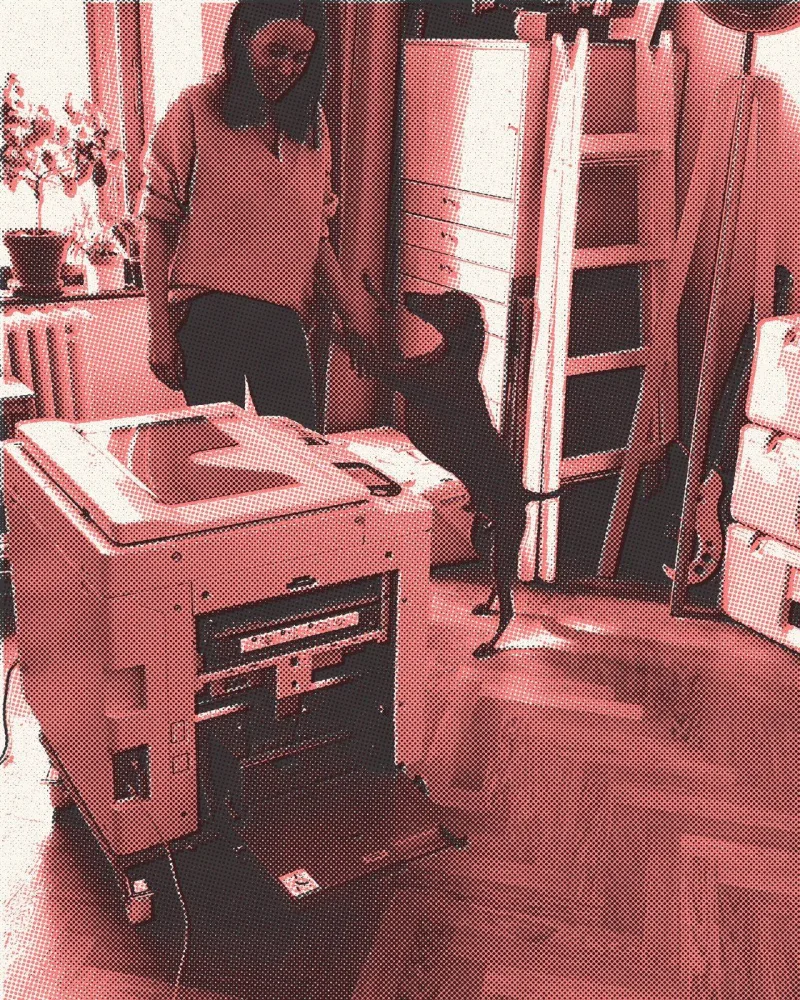
In my studio there is a Riso EZ 571 risograph. At first sight it looks like a big office copier, but it prints in a completely different way. Risography is why riso posters have such rich colours and why every print comes out a little different.
Here is what happens inside before a finished sheet comes out.
The master: a stencil made of thin film
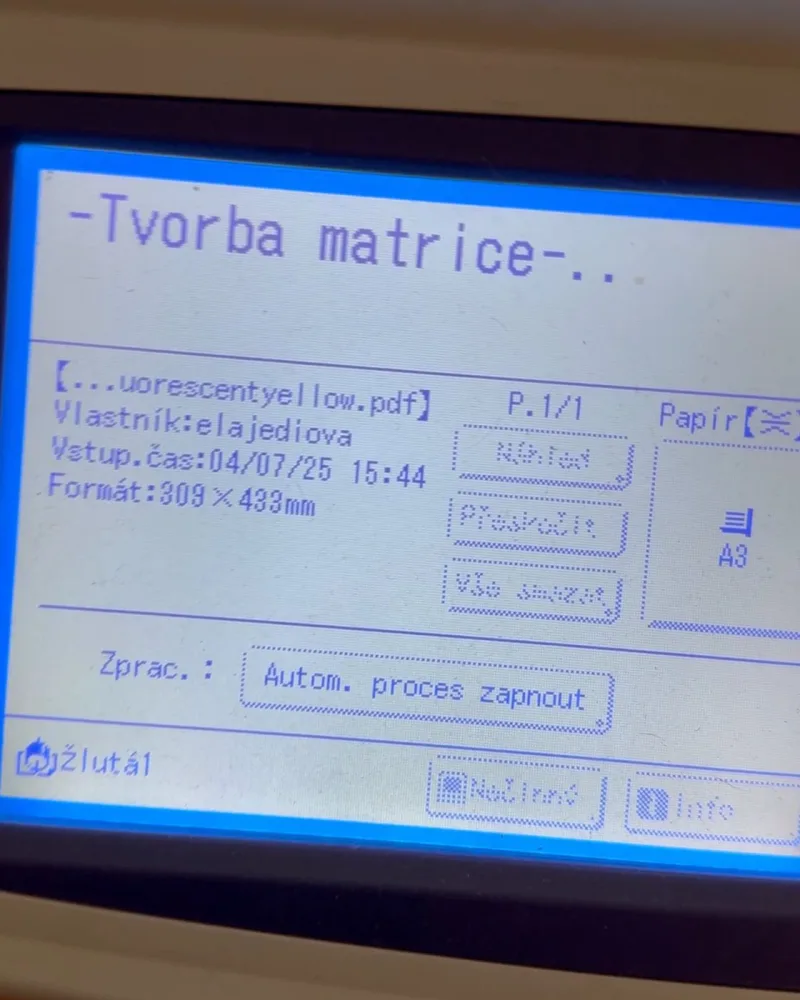
When I send a file to the machine, it first makes a master. A thermal head burns thousands of tiny holes into a thin film exactly where the drawing is, and the film is wrapped around the drum.
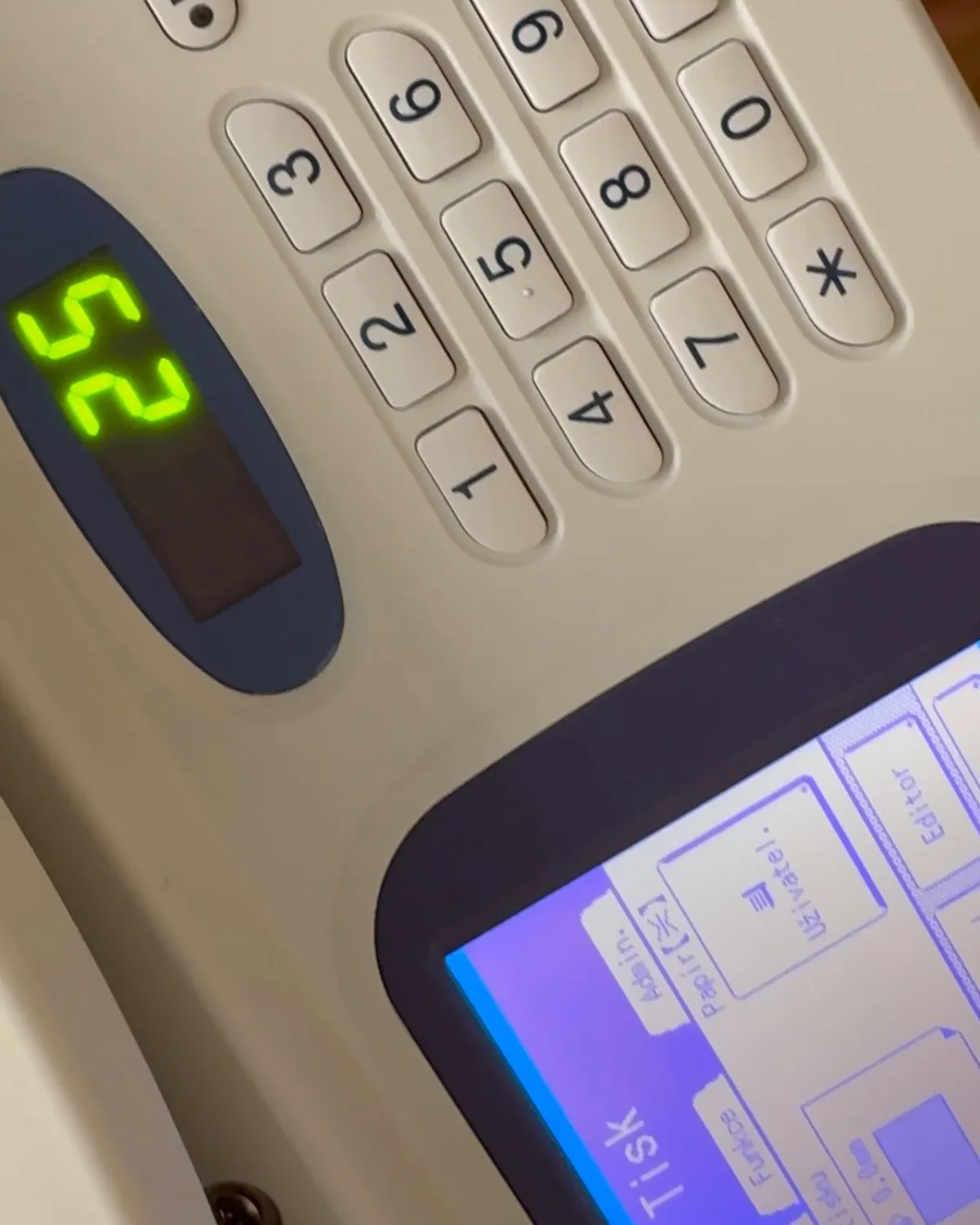
The display says “making master” (in Czech, “Tvorba matrice”). Every colour needs its own master, so this happens again for each layer of a poster.
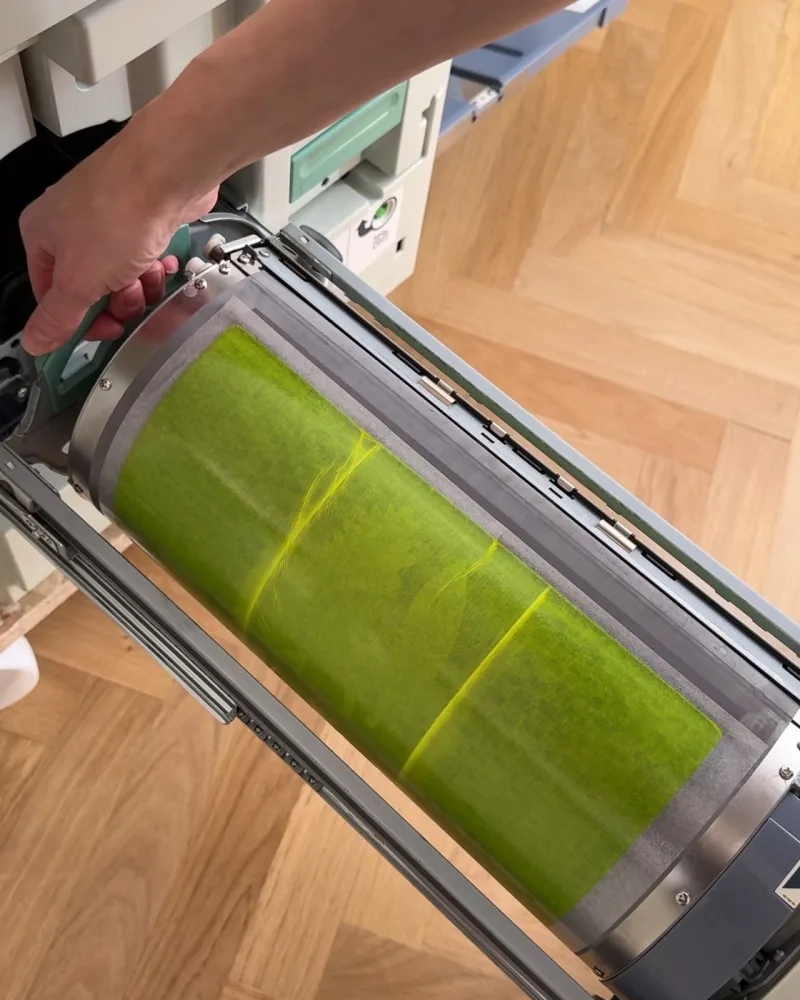
One drum, one colour
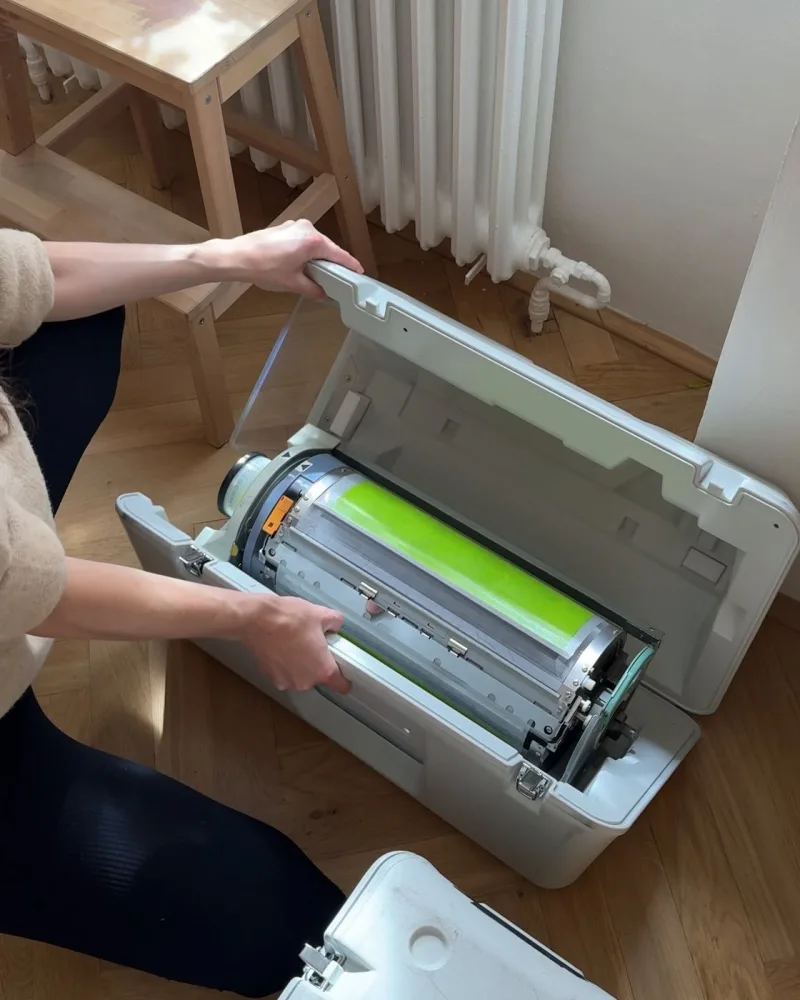
The ink is inside the drum and is pushed through the master straight onto the paper. Each drum holds one colour only. To print another one, I take the drum out and put a different one in.
The drums I am not using rest in plastic cases so the ink does not dry out and nothing gets into it.
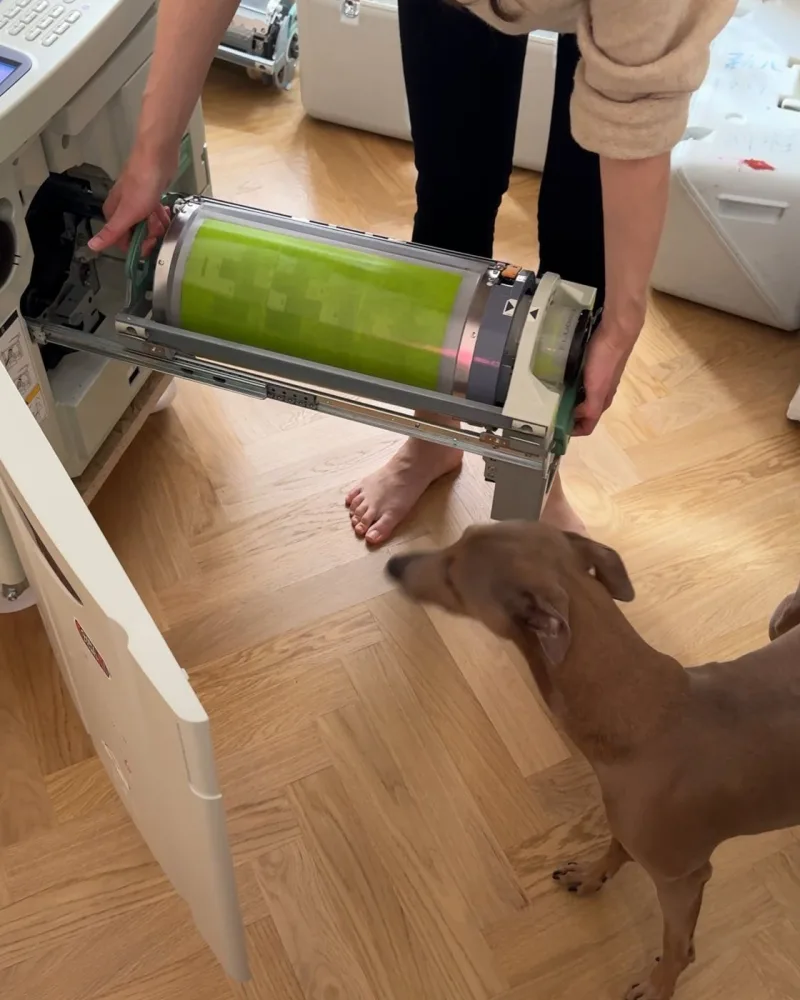
Printing
From there it is fast, sheet after sheet. But in one pass the machine prints only one colour. So a two-colour poster goes through the feeder twice, a three-colour one three times, and before each pass I change the drum and make a new master.
The paper shifts a tiny bit with every pass, so the colours never land exactly on top of each other. That is the typical riso misregistration that makes every print one of a kind.
Inks
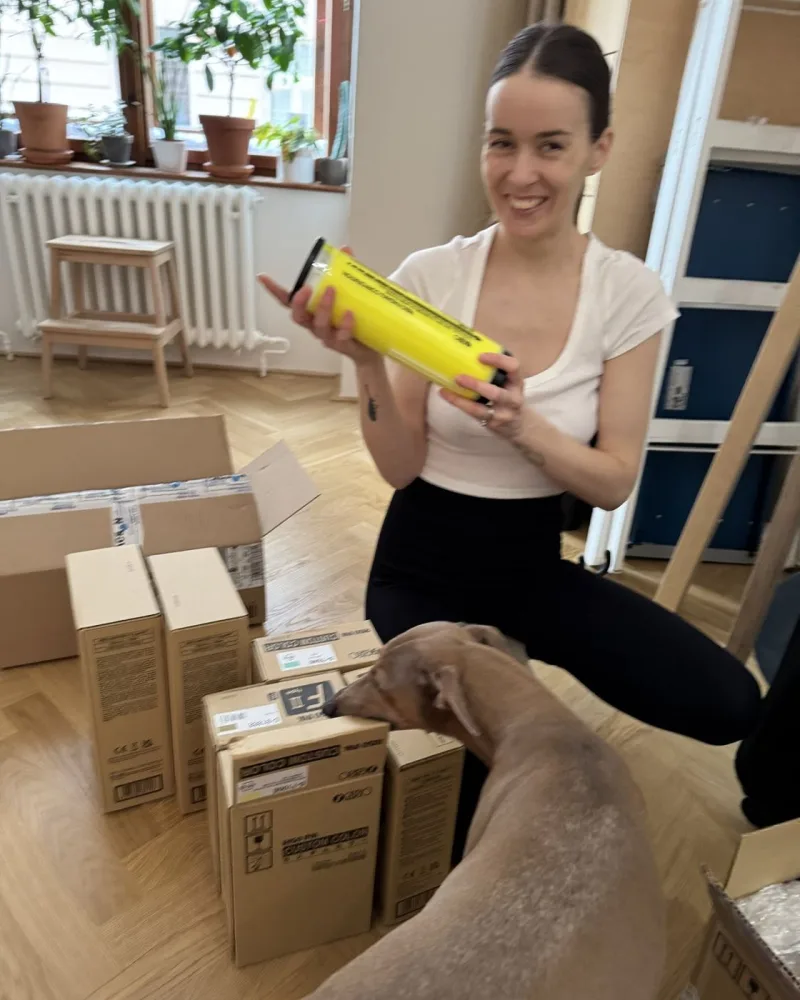
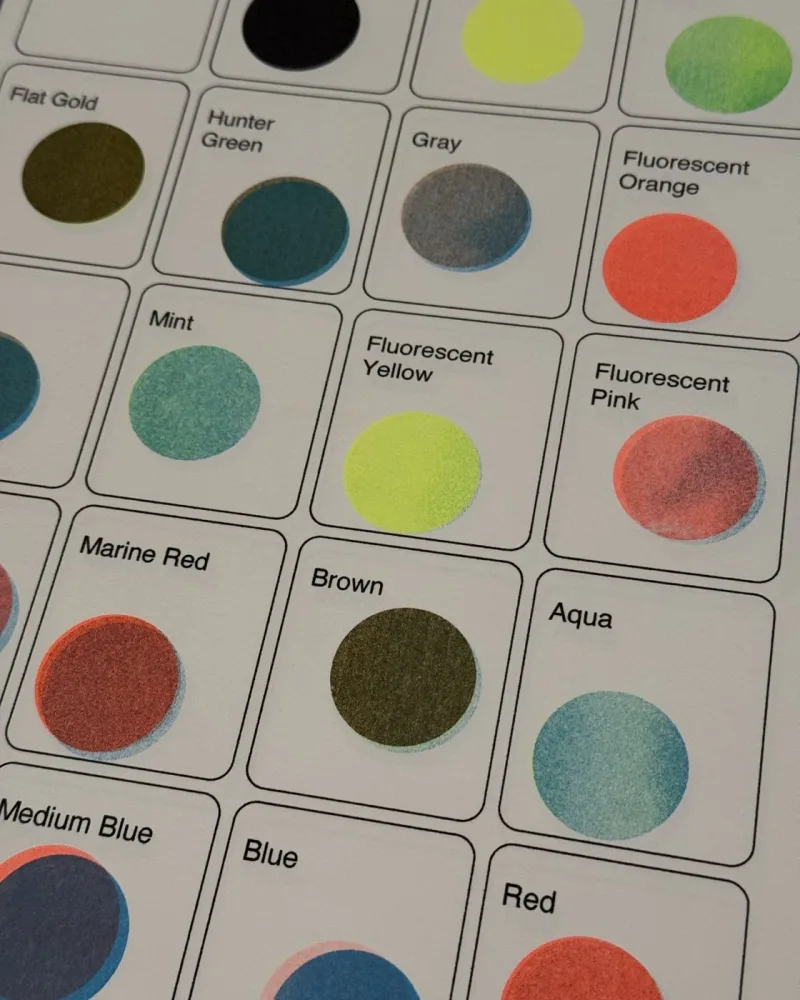
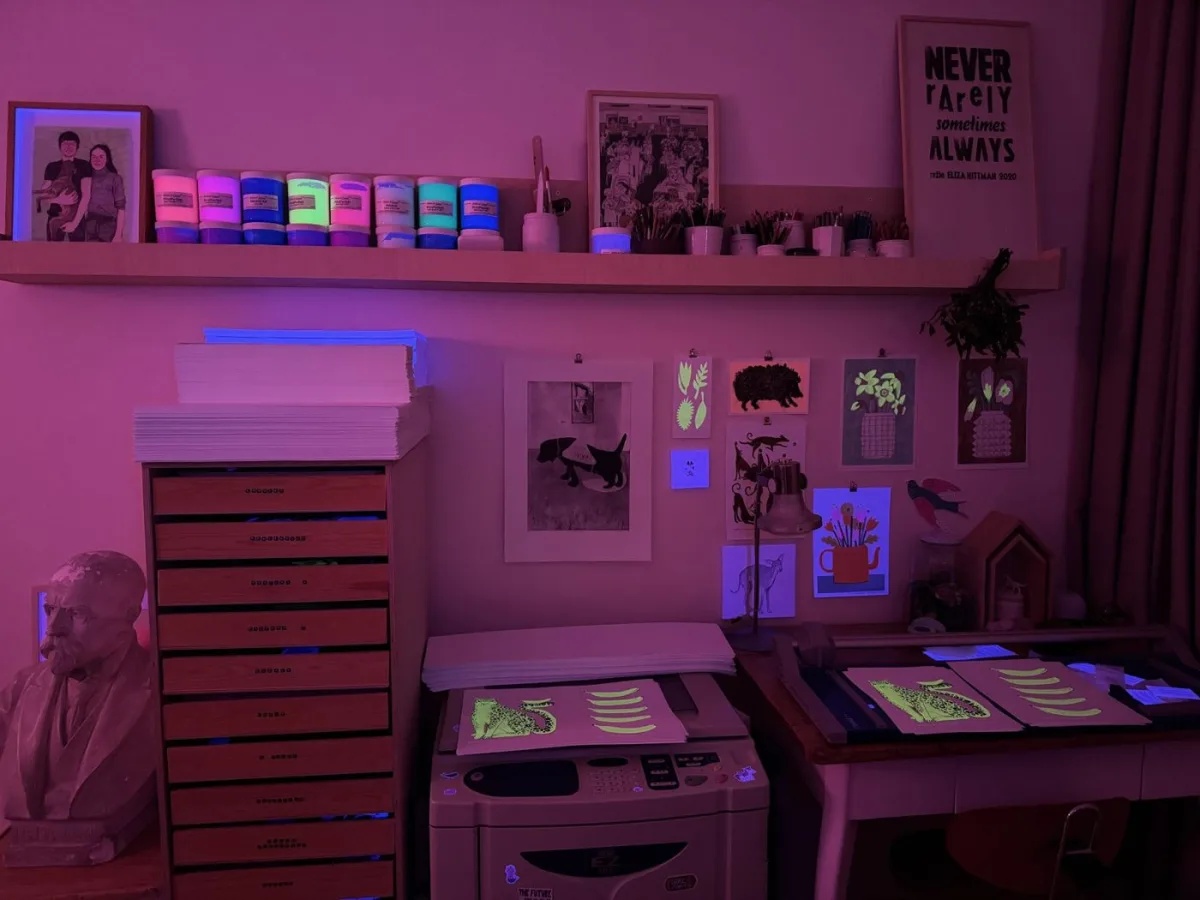
The inks come in tubes made for the risograph, and they cannot be mixed. I have six: fluorescent yellow and orange, gold, mint, aqua and black. Other shades come from printing them over each other.
When a new delivery arrives, it is a small celebration in the studio.